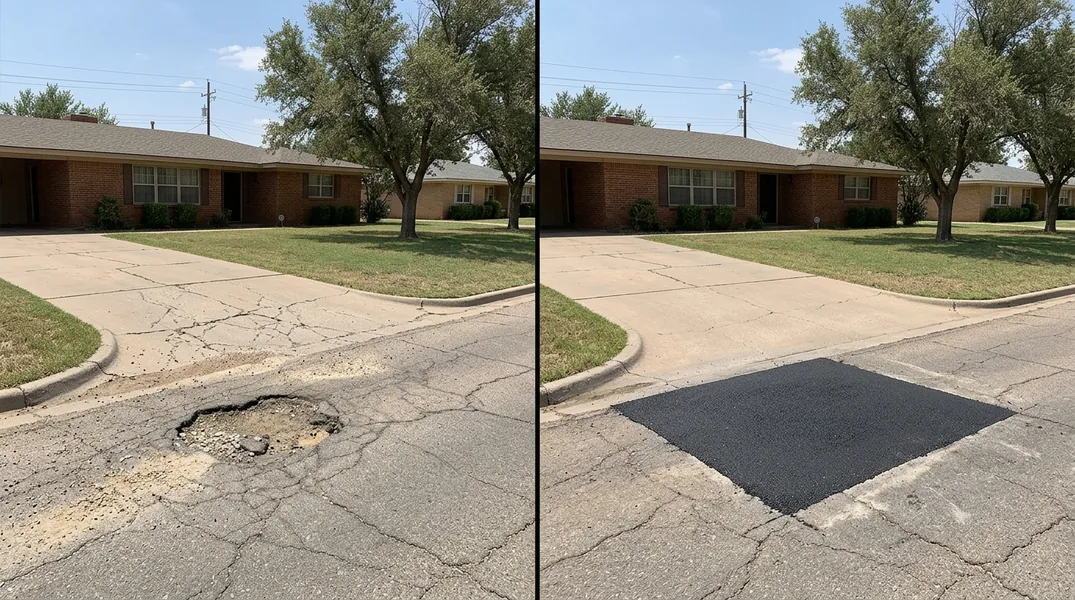
Understanding Panhandle Winter Damage: Frost Heave and Potholes
The Texas Panhandle winter is unforgiving. Freezing temperatures, snow melt, and freeze-thaw cycles create the perfect storm for asphalt damage. If you've noticed new potholes, cracks, or uneven sections in your driveway after the cold season, you're not alone. Many homeowners in Amarillo face the same frustration each spring.
The culprit behind much of this damage is frost heave. When water seeps into small cracks in your asphalt and freezes, it expands with tremendous force. This expansion pushes the pavement upward and creates stress points. When the ice melts and the ground settles unevenly, your driveway is left with gaps, depressions, and potholes. Over multiple freeze-thaw cycles during a harsh Panhandle winter, these small problems compound into serious structural issues that demand attention.
Potholes aren't just unsightly; they're dangerous. They can damage your vehicle's suspension, cause accidents, and allow water to penetrate deeper into the base layers of your asphalt. The longer you wait to address them, the more expensive the repair becomes. That's why understanding your options now is critical for protecting your investment.
When Pothole Repair Makes Sense
Pothole Repair & Asphalt Patching is the right choice when damage is localized and your driveway is otherwise in good condition. If you have one to three potholes or small damaged areas scattered across your pavement, and the rest of the surface is relatively smooth and intact, patching is a cost-effective solution that extends your driveway's life.
A quality patch job involves cleaning out the damaged area, removing loose asphalt and debris, and filling the hole with fresh asphalt material. Professional patching is more durable than temporary fixes because it bonds properly with the existing pavement and compacts to match the surrounding surface. When done correctly, a patch can last several years before requiring attention again.
Patching also works well if you're on a tight budget and need immediate relief. The pricing for pothole repair is significantly lower than full repaving, making it an accessible option for homeowners who want to maintain their driveway without a major investment. However, keep in mind that patching is a temporary solution if your driveway has underlying structural problems.
Signs Your Driveway Needs More Than Patches
If your driveway shows multiple potholes, widespread cracking, or large areas of deterioration, patching alone won't solve your problem. When damage covers more than 25 to 30 percent of your driveway's surface, or when potholes are scattered across different sections, you're likely dealing with a driveway that has reached the end of its useful life. Continuing to patch will become expensive and frustrating because new damage will keep appearing in other spots.
Another red flag is if you're patching the same areas repeatedly. If a pothole comes back within a year or two of repair, it usually indicates that the base layer beneath the asphalt is compromised. Water is pooling underneath, causing the patch to fail. In this case, Driveway Repair through resurfacing or full replacement is the smarter long-term investment.
Consider also the age of your driveway. Most asphalt pavements last 15 to 20 years in the Panhandle climate. If your driveway is approaching or past this age and showing multiple problem areas, repaving will provide better value than continued patching. You'll get a fresh surface, improved safety, and peace of mind knowing your driveway won't deteriorate further for years to come.
Asphalt Resurfacing vs. Full Replacement: What's Right for You
Asphalt Resurfacing & Overlay is a middle-ground option that works when your driveway's base is still solid but the top layer is worn and damaged. In this process, the existing surface is cleaned and prepped, then a new layer of asphalt is applied over the top. This approach costs less than removing and replacing the entire driveway, yet it gives you a fresh, smooth surface that lasts 8 to 15 years depending on maintenance and climate conditions.
Full replacement, on the other hand, removes all existing asphalt down to the base and installs a completely new driveway. This is necessary when the base layer has failed, when frost heave has caused severe settling, or when the existing pavement is so damaged that overlay won't provide adequate support. Full replacement is more expensive upfront but offers the longest lifespan and the most comprehensive solution to structural problems.
Your choice between resurfacing and replacement depends on your driveway's condition and your budget. A professional inspection from Amarillo Asphalt Paving can determine whether your base is still sound. Call (806) 513-4920 to schedule an assessment and get honest guidance on which option will serve you best.
Cost Considerations: Patch, Resurface, or Replace
Understanding the financial implications of each option helps you make the best decision for your situation. Pothole patching is the least expensive option, typically costing between $150 and $500 per pothole depending on size and damage extent. If you have just one or two potholes, this is an obvious choice. However, if you're facing five or more damaged areas, the cumulative cost of patching can rival the cost of resurfacing.
Asphalt Resurfacing & Overlay usually ranges from $1.50 to $3.00 per square foot, making it a moderate investment for a typical residential driveway. Full replacement runs higher, typically $3.00 to $5.00 per square foot or more, depending on the size of your driveway and site conditions. While these numbers might seem steep, remember that a new driveway will last 15 to 20 years with proper maintenance, whereas patches may need repeated attention.
Don't let sticker shock prevent you from getting a professional opinion. Amarillo Asphalt Paving offers a free estimate so you can compare your options without obligation. We'll assess your specific situation and explain which approach offers the best return on investment for your home and budget.
Protecting Your Driveway After Winter: Prevention Tips
Once you've addressed your pothole problem, whether through patching or repaving, maintenance is key to avoiding costly damage in future winters. Seal coating your asphalt every two to three years creates a protective barrier that prevents water infiltration. This simple step dramatically reduces frost heave damage because water can't seep into cracks and freeze underneath the surface. In the harsh climate of Amarillo, seal coating is one of the best investments you can make.
Fill small cracks promptly before they grow into potholes. Crack filling is inexpensive and takes just minutes, but it prevents water from penetrating the base layer. Regular inspection after winter is also important. If you spot new cracks or small damage, address them immediately rather than waiting for them to worsen. Clear debris and leaves from your driveway's surface and edges so water doesn't pool in low spots.
Finally, avoid parking in the same spot repeatedly, as this concentrates wear in one area and can accelerate deterioration. If you're unsure about the best maintenance plan for your driveway, contact Amarillo Asphalt Paving at (806) 513-4920. Our team can recommend a maintenance schedule tailored to your driveway's condition and Panhandle weather patterns.
Looking for a professional asphalt paving contractor in Amarillo? Amarillo Asphalt Paving responds fast for all your asphalt paving needs.
Get a Free Quote